 Garden
Affiliate Disclosure
Some links on this page are affiliate links. As an Amazon Associate, we earn from qualifying purchases — at no extra cost to you. We do not buy, test, or physically handle the products we cover; our rankings come from aggregated owner reviews, ratings and expert consensus. Commissions never change our verdicts. How we rank · full disclosure.
Short version: weeds and yard pests are usually a symptom of something else — thin turf, bare soil, overwatering, or a plant in the wrong spot. Fix that and the problem shrinks permanently; reach straight for a spray and you will be spraying again next month. This hub covers both halves: the cultural fixes that reduce the problem, and the products that handle what is left, with the safety details around kids, pets and vegetables spelled out.
We never buy, apply or physically handle the products we rank. Every recommendation comes from aggregated owner reviews, star ratings, review volume and expert consensus — the method is on how we rank. Always read and follow the product label; it is the legally binding instruction and it overrides anything written here.
Why You Have Weeds in the First Place
Weeds are opportunists. They colonize conditions that grass and garden plants are not exploiting, which means the weeds you have are a readable diagnosis of what is going on. Crabgrass in a lawn almost always means the grass was cut too short and the soil got hot enough for crabgrass seed to germinate. Nutsedge flags soil that stays wet — a drainage problem or an overrunning sprinkler. Clover thrives where nitrogen is low, because it fixes its own. Plantain and knotweed favor compaction, so they line paths and dog runs. Chickweed and henbit fill thin fall lawns where bare soil was exposed.
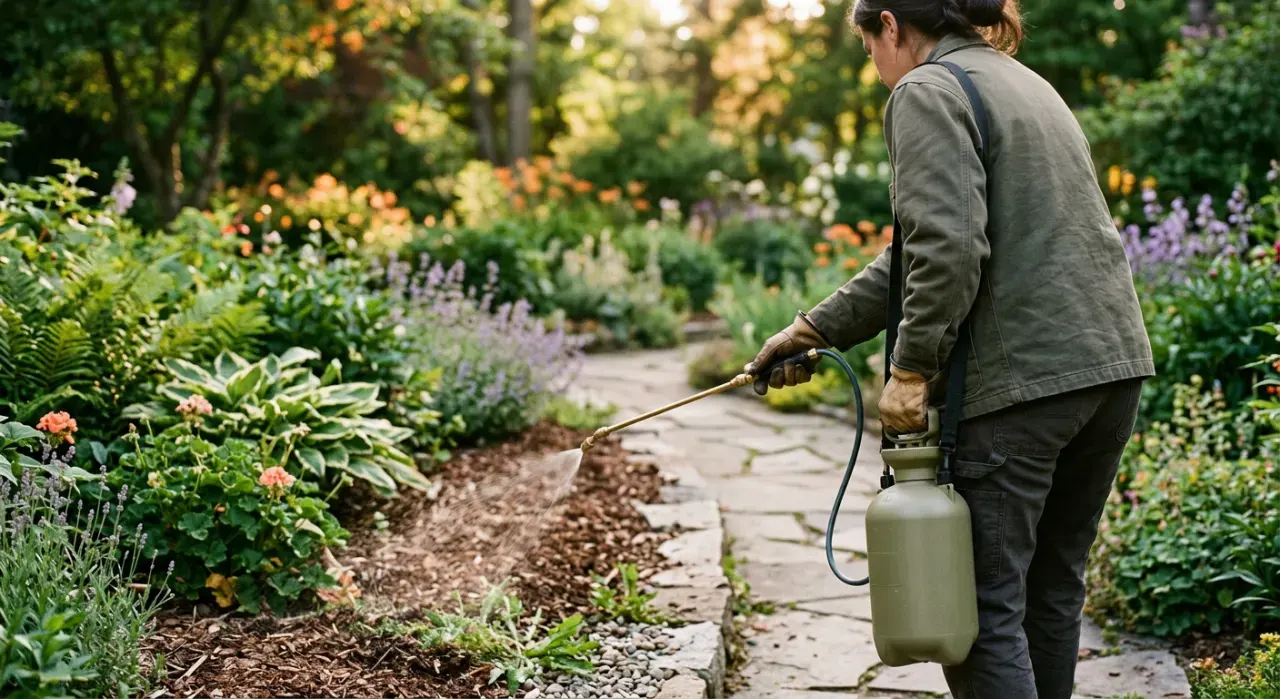
That is why the durable answers are boring: mow higher, water deeper and less often, feed on schedule, aerate compacted ground, and mulch bare soil in beds. Every one of those crowds weeds out for free. Herbicide is the shortcut you use while the turf or the mulch catches up — not the plan. Our weed identification guide works through the common offenders and what each is telling you.
The Four Kinds of Weed Killer
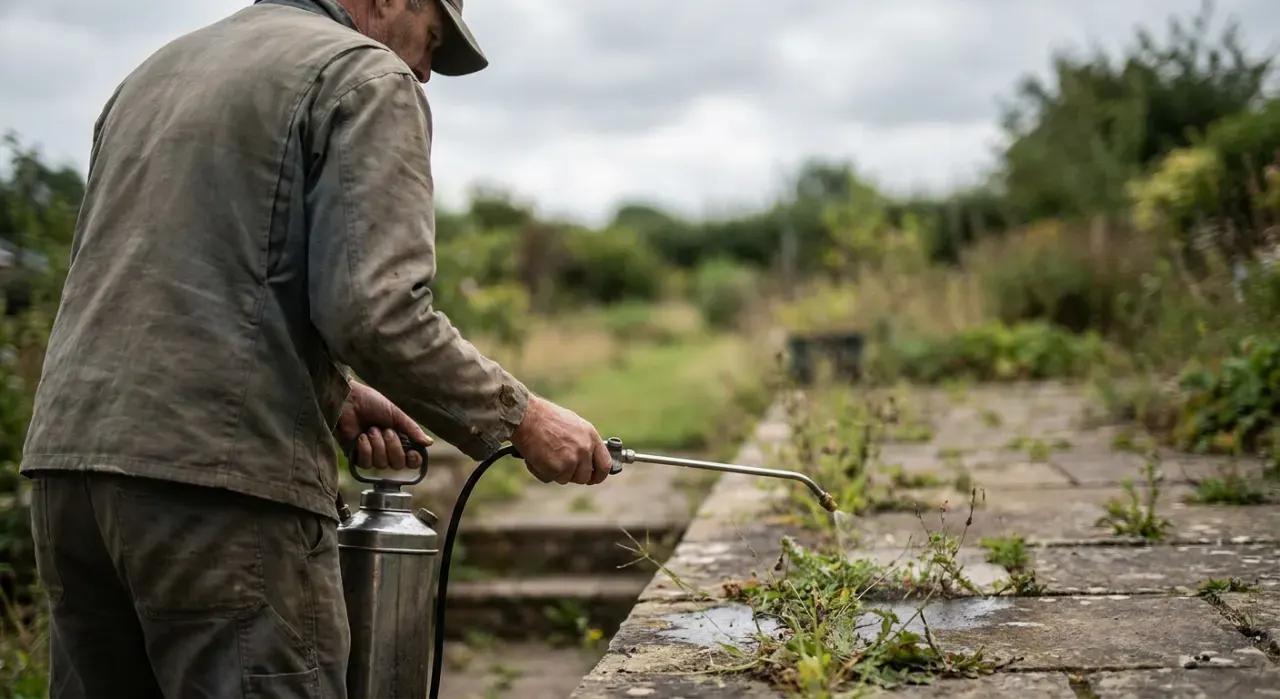
Almost every product on the shelf falls into one of four buckets, and mixing them up is how people accidentally sterilize a flower bed. Selective post-emergent herbicides kill broadleaf weeds and leave grass — this is the lawn category, and the active ingredients are usually combinations like 2,4-D, dicamba and MCPP. Non-selective post-emergent products kill anything green, typically via glyphosate or a fast-acting contact ingredient; they belong on driveways, gravel, fence lines and beds you are clearing. Pre-emergent herbicides stop seeds germinating and do nothing at all to established weeds — timing is the whole game. Total vegetation killers add a soil residual that keeps ground bare for months, which is exactly what you want on a gravel driveway and exactly what you do not want anywhere near tree roots or a future planting bed.
Our selective vs non-selective explainer covers the distinction in detail, and the ranked products by category are in best weed killers.
Organic and No-Chemical Options, Honestly Assessed
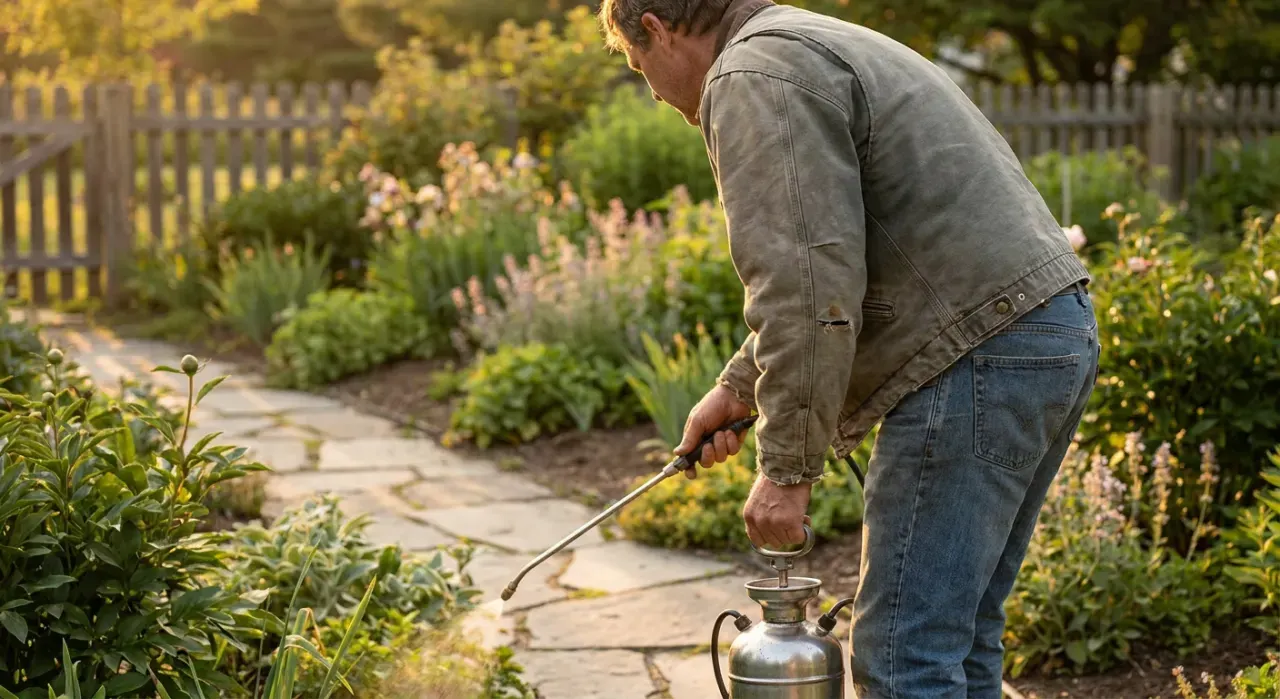
There is real substance in the non-chemical approaches, and there is also a lot of overselling, so it is worth being precise. Mulch works — two to three inches of wood chips over bed soil suppresses the vast majority of annual weed germination and is the single most effective non-chemical control there is. Smothering with cardboard under mulch clears rough ground over a season with almost no effort. Boiling water genuinely kills weeds in driveway cracks and costs nothing. Flame weeding works on hard surfaces if you are careful about fire risk.
Where expectations need managing is with horticultural vinegar and other burn-down organics. They are effective on young annual weeds in hot weather and visibly so within hours, but they are contact-only — the root survives on perennials and the weed returns. They are also non-selective and, at 20% acetic acid, corrosive enough to require eye protection and gloves. Treat them as a genuine herbicide that happens to be plant-derived, not as a gentle alternative. The full comparison is in killing weeds without chemicals.
Yard Pests: Identify Before You Treat
The most expensive mistake in yard pest control is treating the wrong thing. Brown patches in a lawn get blamed on grubs constantly, when the cause is usually drought, dull mower blades or dog urine. The check is simple and free: cut and lift a square foot of sod and count the white C-shaped larvae underneath. Fewer than five per square foot and grubs are not your problem — treating anyway spends money and puts insecticide into a yard for no reason.
The same logic runs through the rest. Ants indoors are usually following a trail from a specific outdoor nest. Fleas and ticks concentrate in shaded, humid edges rather than open lawn, so perimeter treatment beats blanket spraying. Mosquito problems are standing-water problems first and spray problems second — a clogged gutter or a forgotten saucer under a pot out-produces anything a fogger can suppress. Our yard insect killer rankings and grub guide both start from identification for exactly this reason.
Timing Beats Product Choice
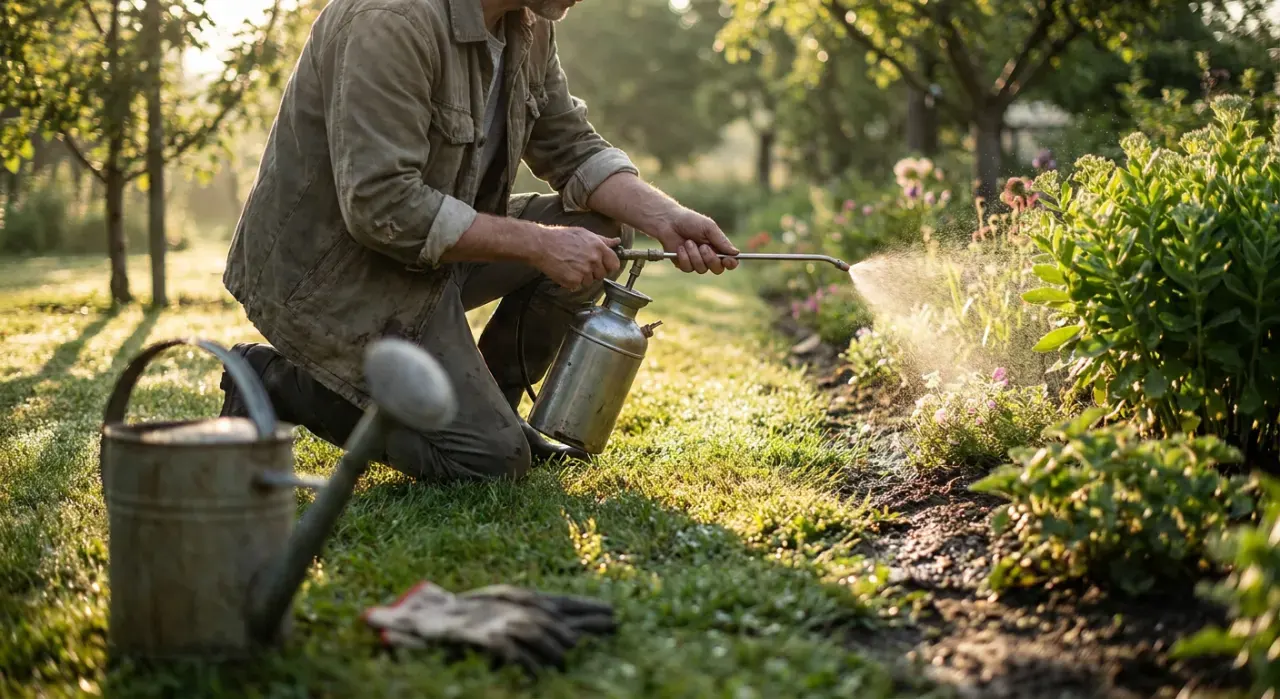
The same bottle produces glowing reviews in April and disappointed ones in August, and the difference is almost never the chemistry. Four timing rules do most of the work. Spray weeds that are actively growing. A drought-stressed weed shuts down its own transport system, so a systemic herbicide never reaches the root — watering a dry area a couple of days before treating measurably improves the result. Watch the rainproof window on the label, which ranges from about ten minutes to three hours depending on the product; rain inside that window washes the application away and is the single most common cause of a treatment appearing to fail.
Apply pre-emergents before germination, not after. For crabgrass that means when soil temperature at 2 inches sits around 55°F for several consecutive days — the traditional cue is forsythia coming into bloom locally. A day late is a wasted bag. Treat perennial weeds in fall. As days shorten, plants like bindweed, thistle and dandelion pull resources down into their roots for winter, and a systemic herbicide applied then travels with that flow. Fall applications on established perennials routinely outperform spring ones on the same weed with the same product.
Wind matters as much as the calendar. Spraying on a breezy day, or with a nozzle set to a fine mist rather than a coarse stream, is where drift damage to lawns and ornamentals comes from — and it accounts for a large share of the angry reviews in this whole category.
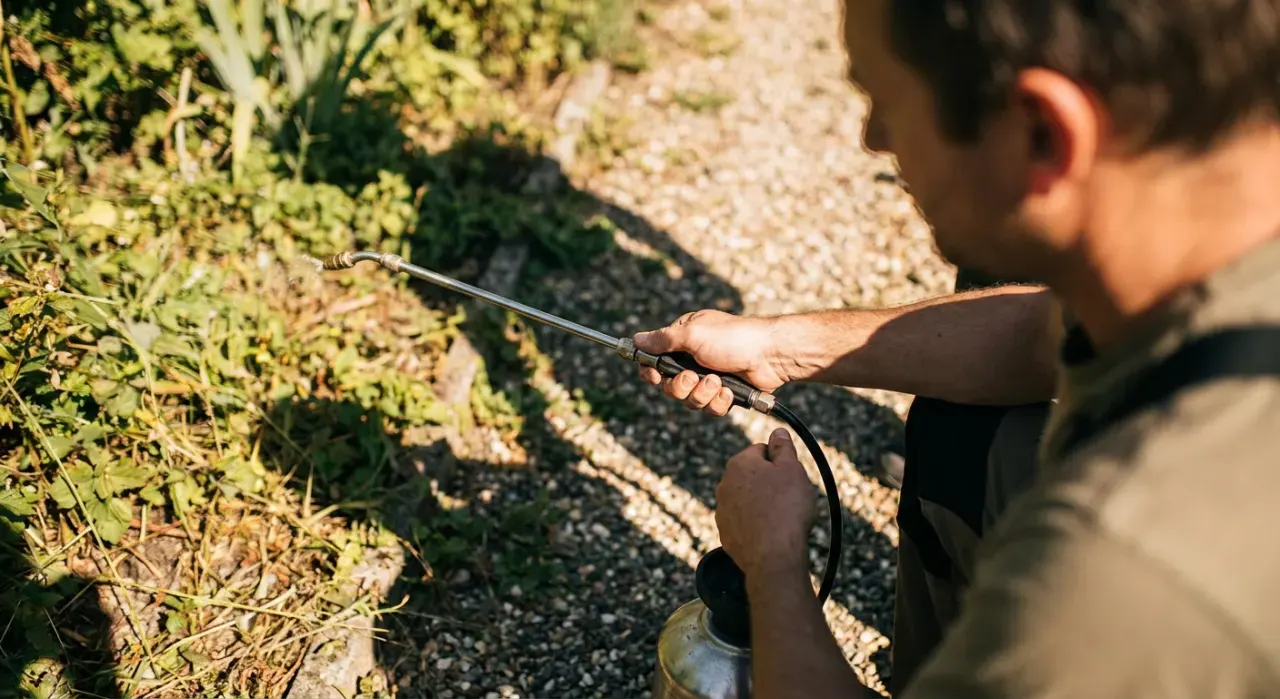
Safety Around Kids, Pets, Pollinators and Vegetables
Four rules cover most of it. The label is the law — in the United States, pesticide labels are enforceable under EPA registration, and they specify re-entry times, rates and where the product may legally be used. Using a product on a site not listed on the label is both unsafe and illegal. Rate is not a suggestion: doubling a mix does not double the kill, it increases runoff and residue. Timing protects pollinators — spraying insecticide on anything in bloom, or in the middle of a warm day when bees are foraging, is the main cause of avoidable pollinator kill in home yards; treat at dusk and never spray open flowers. Vegetable gardens need vegetable-labeled products, with the pre-harvest interval on the label respected.
For households with dogs and cats, the practical approach most owners settle on is spot-treating rather than blanket application, keeping animals off until surfaces are fully dry, and storing concentrates locked and out of reach — concentrates are far more hazardous than the diluted spray. More detail is in weed killers and pet safety.
Where to Start
If your lawn is the problem, fix the mowing height first — most crabgrass complaints trace straight back to it, and our lawn care hub covers the routine. If weeds are already established, work out whether you need a lawn-safe selective product or a total killer before you buy anything, then use the ranked field in best weed killers. And if you would rather not spray at all, mulch and cardboard will do more than any bottle — start with killing weeds without chemicals. The full map of this hub is below.